Daring. Defiant. Domestic.
Some people deal with generational trauma by going to therapy – maybe several therapists across several years. Others indulge in all manner of habits, positive and negative, trying to fill the various holes in their conscious and subconscious left by those tumultuous events. Far too many of us ignore the problems entirely, or at least we do our best to convince ourselves that those problems don’t exist. Still more of us throw ourselves into our work, hoping that perpetual motion will keep them busy. And then there are those of us who get really into magic.
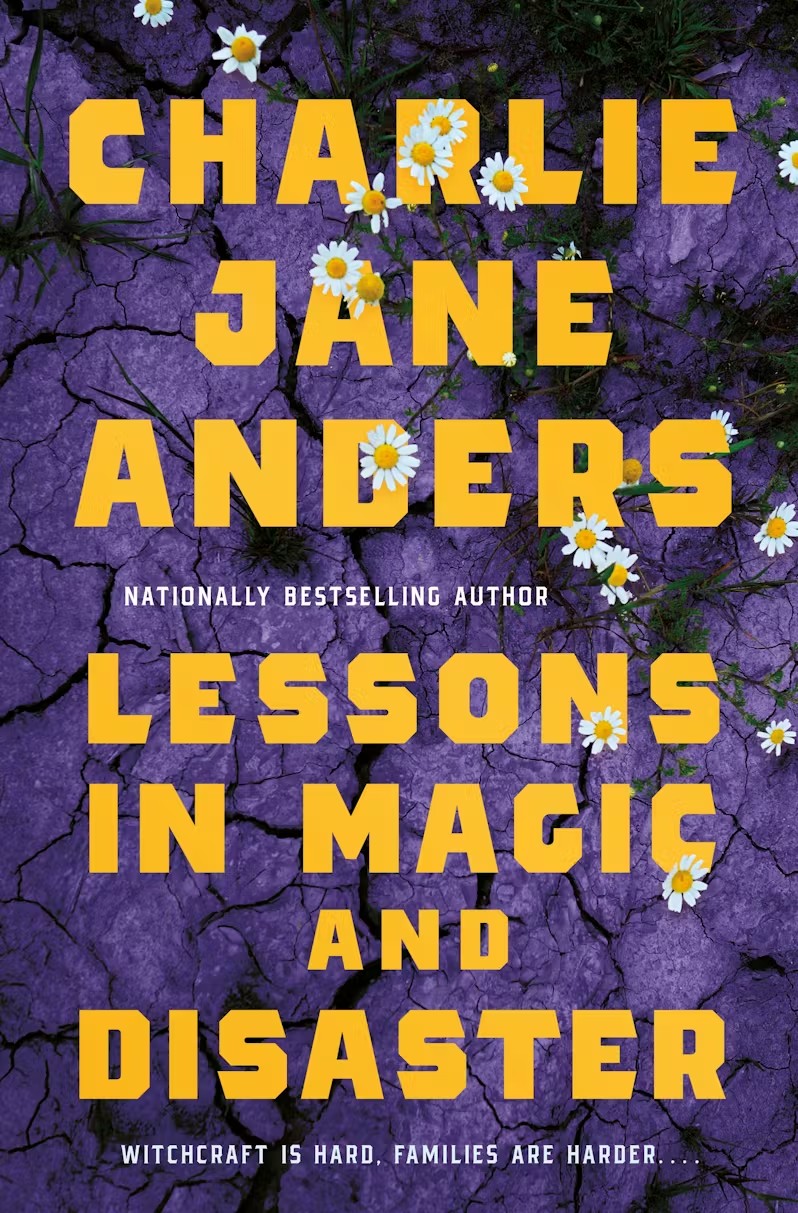
Or at least that’s what Jamie tells herself while paying increasingly less attention to her dissertation, the classes she teaches, and her partner, Ro. Even stranger, she tries to teach her emotionally distant mother, Serena, about magic instead of facing the intertwining troubles that kept them apart for several years. Throughout Lessons in Magic and Disaster, the inimitable Charlie Jane Anders weaves a phenomenal tale about family, love, struggle, friendship, and love – complete with resonant meditations on trust, communication, and transparency.
It helps that the book’s magic system is left as nebulous as possible. On one hand, it reads like a hyper-naturalistic branch of Wicca that focuses intently on liminal spaces. On the other hand, Jamie and her fellow practitioners can barely explain how it works to each other, only noticing that some of them are better than others and that each of them seeks out different varieties of those in-between places. Any deeper description would have slowed down the pace of the events in exchange for a Sandersonian explainer.
But what really made the book sing was the rich and thoughtful portrayals of queer love across both history and literature. Anders crafts relatable characters with authentic, lived-in relationships that intently avoid both familiar cliches and unrealistic panaceas. In fact, an all-too-real plot point finds the characters battling some heinous Rufo-esque hatemongers, which gives the story a painful yet essential realism. And while the story does come to a lovely conclusion, it refuses to tie everything up in a nice, neat bow – that’s simply not how life is, especially when it comes to the people you love.
If you’re looking for a fresh take of witchcraft in the modern world, complete with some contemporary sociopolitical machinations, an academic setting, and fantastic queer relationships, then you need to read this book.


Leave a comment