Quirky. Questioning. Queer.
I am both a Star Trek nerd and a history dork. By learning about the past and imagining a better future, I can helpfully analyze the present with a heady mix of realism and optimism. But it also means I have a healthy appreciation for the ridiculous. Because history books – especially when you step back from the “Great Man Theory” – are filled with all manner of silly shenanigans. And Star Trek is best enjoyed when the serious speeches about improving human nature are mixed with holodeck nonsense.
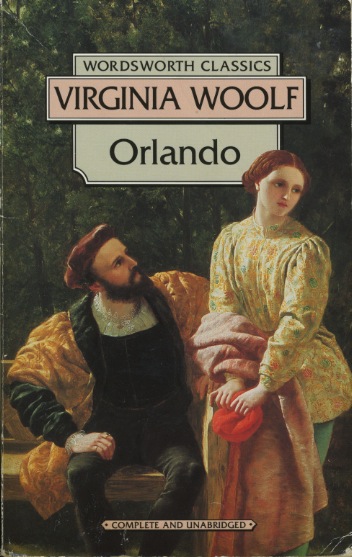
That dual background put me in a superb place to appreciate Orlando, the gender-bending faux biography by Virginia Woolf. Now considered a classic of lesbian and transgender literature, the story is a lovely tribute to Vita Sackville-West, Woolf’s lover and friend. But it also serves as an alternately scathing and hilarious critique of British literary and societal norms, especially in terms of class, expectations, and traditions. So, to my addled Star Trek brain, it read like a multi-century romp about a legendary Trill like Dax.
To the uninitiated, the Trill are a race where some humanoids can enter in a symbiotic relationship with a slug-like creature that lives for hundreds of years. It is the “Symbiont” that retains all the memories from every host, which means a new host remembers everything from prior hosts, regardless of gender or sexuality. Many LGBTQIA+ Star Trek fans have found solace in the Trill experience, especially because of how it describes changing one’s gender expression and sexuality.
The book begins with the titular Orlando as a male page serving in the court of Queen Elizabeth I. The book ends with Orlando as a woman married to a minor British noble in the 1920s. In between, our protagonist ebbs and flows amidst various roles across the British Empire, including high society, famous members of the literati, the ambassador corps, and the Romani, while also switching from a man into a woman while living in Constantinople. Our main character falls in and out of love, gets married, pursues lovers, is pursued by lovers, writes poetry, gets lampooned in the press, withdraws to their family estate, and more.
The beauty of the book rests in the balance between the ridiculous events of everyday life and Orlando’s deep introspection at their change in gender halfway through the long length of their life. We get regular internal monologues discussing whether their life was better as a man or woman, complete with reflections on how they’re treated, the expectations placed on them. But we also get brilliant descriptions of comical circumstances, especially when it comes to matters of the heart, both loving and lustful.
It’s the relatable everyday-ness of Orlando’s life across multiple centuries that I found most appealing. Some friends of mine who suggested the book to me got caught up in the time travel aspects, while others focused on the sociocultural and sexual commentary. To me, a cishet white guy, those elements are important, but they achieve that resonance because Orlando experienced normal stuff: falling in love, getting rejected, hating your job, being depressed, and simply living life. Thus, the book can be transgressive and funny (almost approaching camp) because it refuses to be pedantic or self-serious.


Leave a Reply