Surly. Strong. Spectacular.
Science fiction has a long tradition of stories about underdogs defeating entrenched authorities. This could be internal bullies, external governments, domestic trauma, interstellar empires, and more. For an author to explore those well-trodden tropes with any depth or freshness, they must seek a different perspective. And since there is very little new under the sun, you must look for underrepresented and underappreciated angles when crafting a narrative.
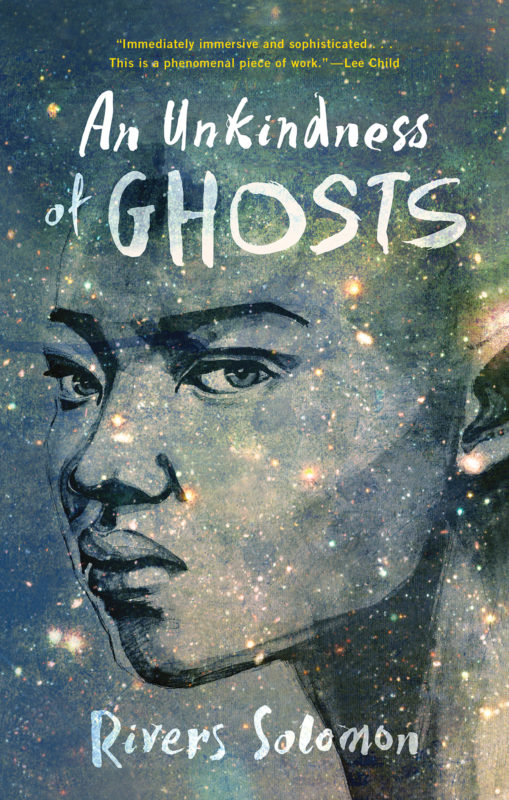
That penchant for locating the uncomfortable inside the familiar is what I probably loved most about An Unkindness of Ghosts by Rivers Solomon. Published by Akashic Books, it’s the story of a generational spaceship looking for its divinely ordained new home after the people onboard fled their decaying old one. Our view of this racially segregated vessel is Aster, a neurodivergent and gender nonconforming person who is especially gifted in chemistry, botany, and practical medicine. Then again, she wouldn’t use any of those adjectives to describe herself, which is part of the narrative charm.
While she is obviously the “special one” – the gifted prodigy in many science fiction narratives who always seems to save the day – she doesn’t get treated that way by the other characters or the author. Instead, Aster chooses to use her gifts to do the mundane tasks of everyday life, which usually means finding ways to relieve the pain the underclasses experience after doing long shifts of manual labor. Yes, she has her secret greenhouse, and yes, she learns from and gets special passes from the ship’s surgeon (the illegitimate child of a former ruler), but she also fiercely protects her family and friends. And while she does want to help people and find out what happened to her mother, she doesn’t really want to be a leader or the face of any sort of rebellion.
The obvious parallels are Octavia Butler’s Lauren Oya Olamina and Suzanne Collins’ Katniss Everdeen, but I also find many structural allusions to Ursula K Le Guin and Samuel Delany. Such sensations come to the fore with how the ship’s society is built and how the science works. Because nothing feels clinical, expository, or overly explained, the story feels absolutely lived in and doesn’t feel the need to describe itself. This allows the reader to stroll the halls, tunnels, and floors with Aster as organically as possible. You smell the food, feel the rough clothes, hear the cries of pain, and watch the centuries of racialized oppression crush the working class.
For all that weight, the book has an overall hopeful tone. Solomon isn’t interested in bludgeoning readers or characters with pain and trauma. Yes, people do go through it in the book, but no one is iced, fridged, or otherwise harmed for emotional or psychological points. All told, it’s a fantastic read with a fascinating protagonist and compelling side cast, one that doesn’t require a lengthy series to tell its story. And science fiction readers need more of that on their shelves.


Leave a comment