Holy. Hallowed. Haunting.
Growing up going to a Pentecostal church with my mom, I regularly heard preachers lambast the Roman Catholic Church. This was in the ‘80s and ‘90s, mind you, not some mid-century moment where Protestants worried about John F. Kennedy getting his marching orders from the Pope in Rome. It got especially weird when some traveling evangelist would rail about the “Whore of Babylon,” which made me afraid that my dad would really go to hell because he was Catholic. I went to church every other Sunday with him, and his fellow parishioners were really nice – even if I didn’t quite understand the theology.
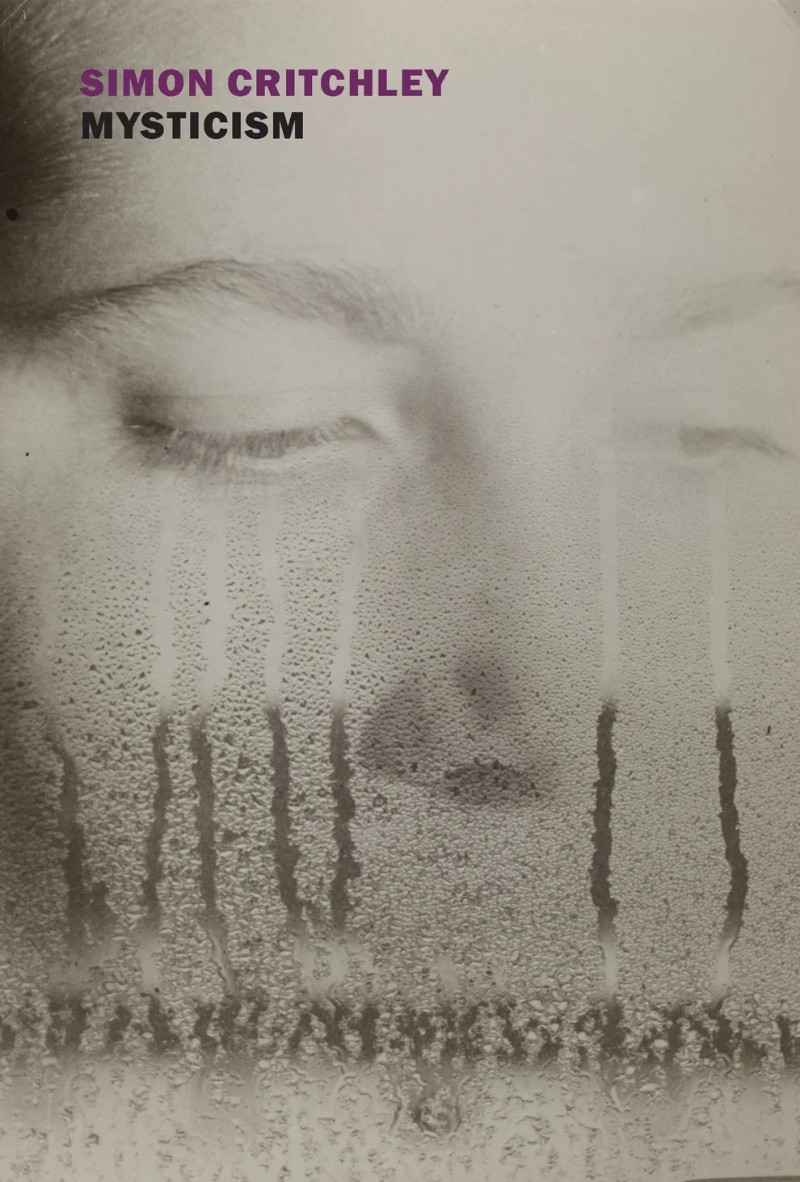
I thought about this dichotomy often when reading Mysticism by Simon Critchley. No, he didn’t write about the historical differences between Protestants and Catholics, much less parse anything approaching contemporary theology. But the book did make me think deeply about the experiential nature of Christian worship, especially in how charismatic Christians are much more like old-school mystics than they’d ever want to admit. Published by New York Review of Books, it’s an engaging tome that discusses his affection for the sainted mystics of the middle ages and early modernity in tandem with creating and appreciating art.
Critchley is open about his atheism, but he also talks reverentially about practitioners like Julian of Norwich, Francis of Assisi and Meister Eckhart. These venerated believers from Catholic antiquity wrestled openly and honestly with their beliefs, and they did so from a place of wanting to experience all God had to offer them. The fantastical stories that have been shared across the centuries about levitation, death-like comas, glossolalia, stigmata, and more are treated by people on the other side of the Enlightenment as delusions at best and lies at worst. And yet, to mystics, they were simply parts of their communication and communion with God.
The crux of Critchley’s argument in favor of mysticism lies in his definition. He contends that it is a private experience of an ardent believer seeking unity with the divine – not to be consumed but to become truly one – that then becomes public because the mystic shares those thoughts with others. While the practice and experience of mysticism probably features esoteric thoughts and actions, they don’t necessarily feature stereotypical asceticism. If it did, then we wouldn’t know about mystics because they wouldn’t have told anyone about what they were doing, thinking, and feeling.
And this is where he introduces authors like Anne Carson, Annie Dillard, and William James along with musicians like Julian Cope, Nick Cave, and Can. He writes with great affection for people who can move beyond mere autofiction or memoir to pursue the liminal spaces between the physical and spiritual without being wholly subsumed by either. He contends that the pursuit of art, both creating it and appreciating it, is the most honest and truest way for people, especially in 21st century post-postmodernity, to seek out what’s beyond themselves and what lives between all of us. That is what approaches true spirituality.
As I write down my feelings and impressions about this excellent book, I’m not sure I’m making much sense, but I also think Critchley won’t mind. I think he would tell me that’s kind of the point of mysticism. It isn’t some something wherein you hide yourself away from others and refuse to interact with the rest of humanity. In fact, lay religious folks have consistently gone out of their way to interact with holy people, whether it’s the Oracle at Delphi, gurus sitting on mountaintops, prophets sitting in desert caves, or penitents in monasteries. The mystics of yore definitely wanted to spend time in deep communion with their God, but they also wanted to hash out those feelings and experiences so that others could partake. And it’s more than OK to be confused.
Which brings me back to the raucous Pentecostal church services of my youth. Depending on the night, it could be a three-hour (or more) ordeal filled with loud gospel music, frenetic preaching, entranced elders speaking in other tongues, women dancing like no one is looking, men running laps around the sanctuary, and people writhing on the floor. These folks would flee from any comparisons to the practices of medieval Roman Catholic mystics, but the concepts are the same: Seek out a connection with the divine that blurs the lines between physical and spiritual and then share the details of those experiences with others. Bonus points if it includes a combination of ecstatic, phenomenological, and/or artistic expression.


Leave a Reply