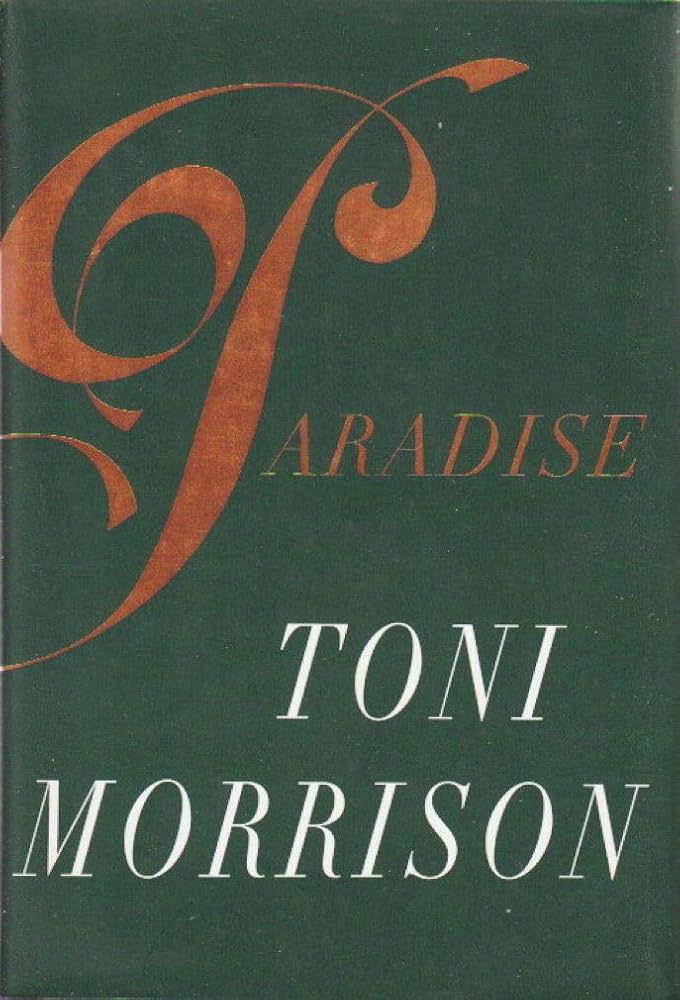
Deep. Disturbing. Dazzling.
Families are loving. Families are weird. Families are full of support. Families are full of drama. Families are safe. Families are scary. Families contain multitudes. Families make you seek solitude.
The heart of Paradise by Toni Morrison is one of contradictions, and they extend far beyond mere binaries. It’s the story of a hidden town in super-rural Oklahoma founded by several friendly Black families who’ve been connected for decades. Many of their shared roots extend far back into Antebellum slavery, and they’ve understandably bound themselves together for protection, mutual assistance, and stability. However, as the town ages and modernity approaches, Paradise threatens to be torn asunder through ruthless male leadership, political infighting worthy of medieval nobility, and downright fear.
On the edge of town sits a former Catholic convent now occupied exclusively by women, all outsiders to the community. Each woman arrived in Paradise with troubled pasts, and because they didn’t meet the approval of the town’s leadership, they slowly made their way to the dilapidated home. Together, this found family raised peppers and various vegetables that they then sold to the townspeople for their own means of subsistence. Told from a range of female perspectives, the book arrives at a violent yet preternatural climax that provides no answers and lays bare the town’s turbulent soul.
It’s liminal and elegiac, rustic and resplendent, a powerful testament to the tremendous skills of Toni Morrison.


Leave a Reply