Sprawling. Skilled. Splendid.
Using place as the main character in your story isn’t an original choice, but it is a curious one. It requires a different sort of attention to detail because you only connect to it in relation to other people. Yes, the omniscient narrator – whether first or third person – can describe the setting to the reader, but that is dissimilar from reading about how the human characters interact with their environment. Getting to know a place with any intimacy or familiarity involves both specificity and generality, as how each person views and works in nature can vary greatly.
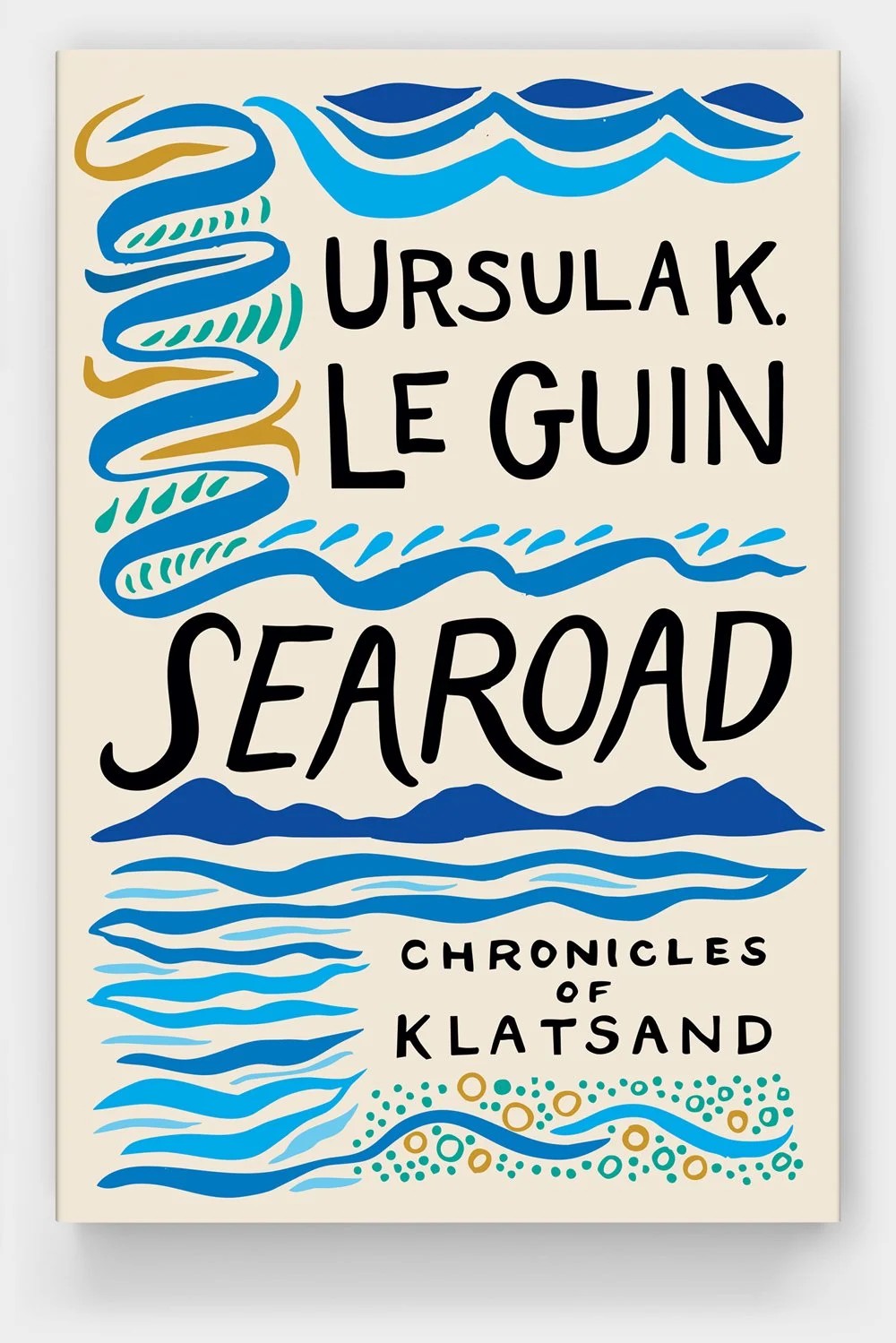
Which makes Searoad a delightful artifact in the career of Ursula K. Le Guin. The first book she ever wrote that wasn’t any sort of fantasy or speculative science fiction, it’s the tale of a fictionalized small town on the Oregon coast called Klatsand. Technically a collection of short stories, it’s more a novel where each chapter features a different focal character and their lives in the town. Told across several decades, some families and plot points receive oblique intra-book references, but such mentions only serve to provide depth and resonance to the village itself.
Much like her work across Earthsea and in The Dispossessed, she puts you right in the middle of the story’s world but without intense over-description. Her economy of language remains one of the hallmarks of her entire authorial style. With these stories, you can feel the sea salt, the crunching beach sand, the movement of cars on the titular highway, and the wind through the conifers.
Yet, while Searoad feels like an obvious forerunner to novels such as How High We Go in the Dark by Sequoia Nagamatsu, it also stands apart from those neo-epistolary novels because of its focus on the humdrum events of common lives. Atop the luminous and tactile prose about the location’s natural beauty sits a wealth of domestic drama. Recounting experiences ranging from heartbreak to despondence and from whimsical to intense, Klatsand and its inhabitants are special exactly because they are not.
Thus, even in a relatively minor work from this celebrated author, we find reason to pay attention to what she has to say – and what she doesn’t. Sometimes, the world can speak for itself.


Leave a Reply