Morose. Maternal. Misanthropic.
Parenting is hard. It might be the hardest thing I’ve ever done. You have to navigate this tenuous balance between taking care of a small person’s needs while also teaching them to take care of themselves while them encouraging them to find themselves while giving them the tools to maybe someday leave the nest while also being your own person while maybe even sustaining a healthy relationship with the child’s other parent. While while while while. It’s a lot. And it’s totally worth it! I love my kid! But it can also be mentally, physically, and psychologically draining all at the same time.
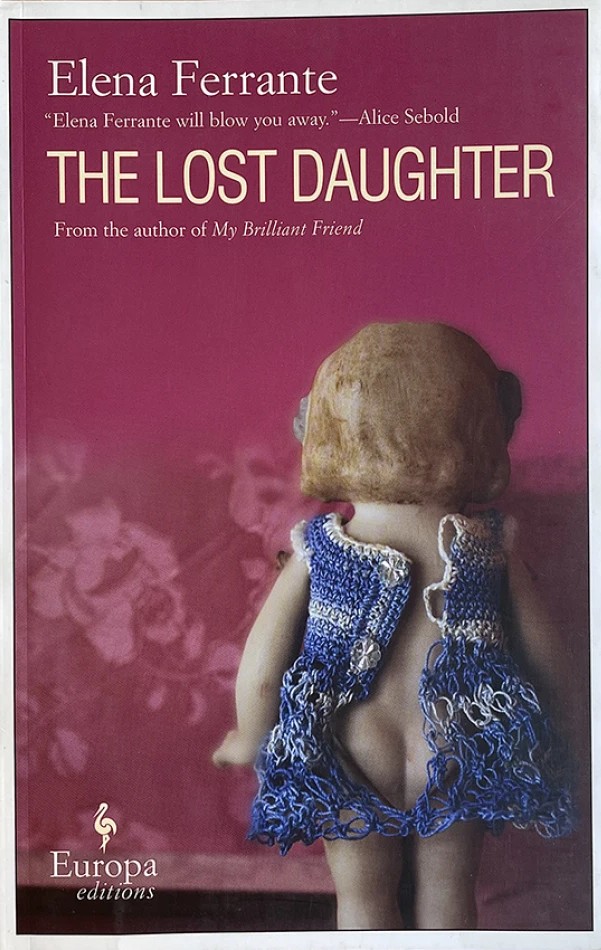
But unlike the protagonist of The Lost Daughter, I never decided to leave my child for three years in hopes of finding myself without any parental obligations. I definitely never returned to my family, saw my spouse eventually divorce me and move across the Atlantic Ocean, and watched my children follow him as soon as they graduated high school. And I certainly didn’t get entangled in another family’s generational drama while on summer vacation.
Then again, most of us aren’t Leda, the sharp-edged creation of the inimitable Elena Ferrante. To her credit, she doesn’t want the reader’s pity, and she didn’t seek after pity from the inhabitants of that coastal town in southern Italy. She only wanted to spend a few weeks enjoying the sunshine and sea air while reading and preparing for her next semester of teaching. While she did partake of the relaxing environment, she also entertained the advances of her grandfatherly landlord, flirted with the lifeguard, and served as chief counselor and subtle antagonist of a sprawling family down the beach.
It’s a story of blatant melancholy and caustic remembrance, half internal monologue and half conversation with the other vacationers. Leda both refuses to apologize for her choices while also seeking some sort of solace for those choices. She readily admits that she wasn’t a traditional mother, so she knows why her children hold her at arms’ length. But she also recognizes that her choices allowed her to become an independent woman by middle age, as she feels that she married and had kids too young. It’s a character study on the conflict between motherhood and adulthood that refuses any easy answers.
Leda doesn’t want you to like her, and neither does Ferrante – and I like that a lot.


Leave a Reply