Insightful. Inventive. Illuminating.
Though I spent most of my 20s reading nearly exclusively nonfiction, I am now a firm believer that you can learn more truth about the world by reading well-written literature. In fact, humans have conveyed meaning through stories for the bulk of our existence. From myths and legends to parables, fables, and beyond, some of the most influential religious leaders and philosophers throughout history used conjecture and fiction to teach their followers. By speaking in tall tales or using everyday situations, people could more easily remember the lesson and apply it to their lives than pondering abstract theory.
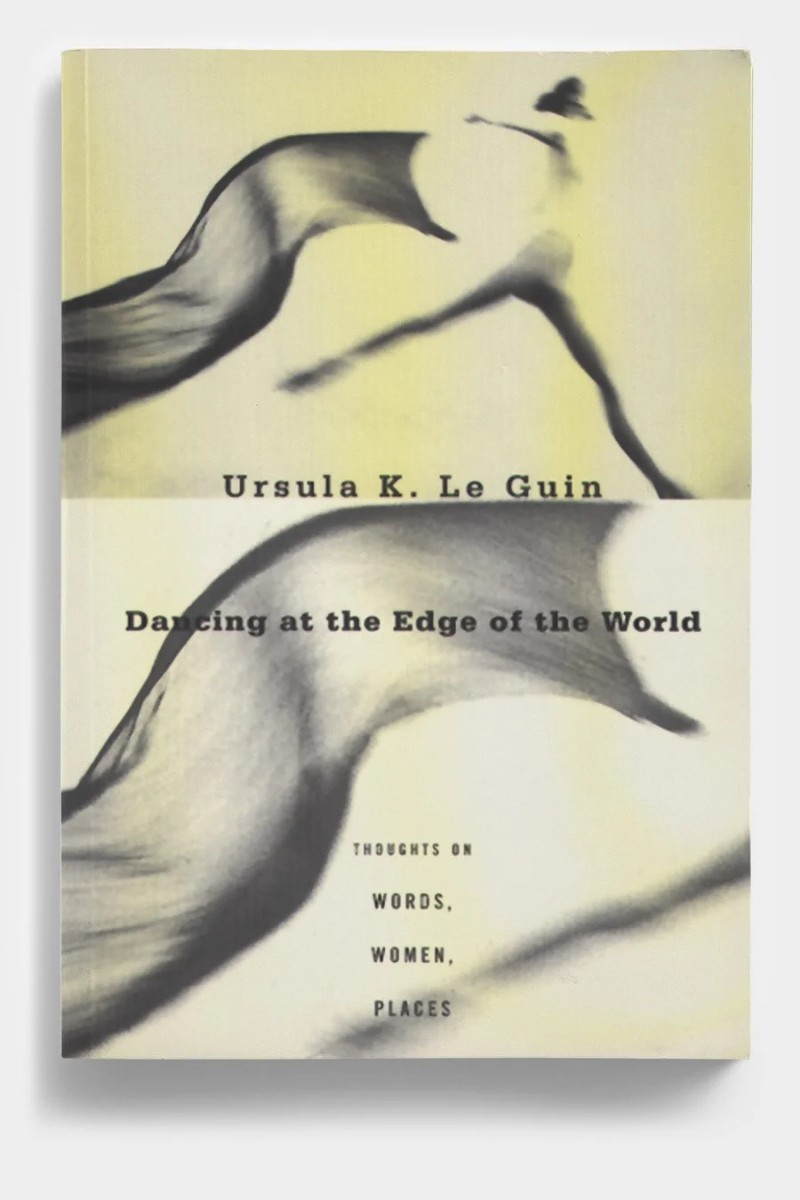
Then again, if you’re Ursula K. Le Guin, you can work in both mediums with the utmost skill. The acclaimed science fiction and fantasy writer frequently gave speeches, wrote blog posts, and penned journal articles full of her thoughts. One of the best collections of that work is 1989’s Dancing at the Edge of the World, as it combined talks, essays, and reviews from 1976-1988. Subtitled “Thoughts on Words, Women, and Places,” the book gives us a deep, layered view of her beliefs and views, ranging from feminism and abortion rights to the craft of writing, contemporary film, and travelogues.
As someone who has read a great many of her novels, I thoroughly enjoyed watching her style and substance evolve with the turn of each page. She openly admits to this the intro, and she annotates a few of her essays to explain how her thinking has grown, shifted, and/or deepened between the original piece and the publication of this collection. This candidness proved refreshing and invigorating. While she could have simply not included something that expressed an outdated view of hers, she instead took the opportunity to reveal her development as a person, thinker, and writer.
Her best pieces are the shortest. As any comedian or blogger can tell you, your best work often comes from working with small time and space constraints. If you only have a couple thousand words or maybe 10 minutes to connect with your audience, then you must hone your material to the sharpest possible point without much wiggle room. Contrary to what we might assume about a novelist, Le Guin excels in this environment, maybe because she’s also a poet who has additionally written short stories for many years. Check out “Moral and Ethical Implications of Family Planning,” “Some Thoughts on Narrative,” “The Princess,” “The Carrier Bag Theory of Fiction,” and “Where Do You Get Your Ideas From” for an excellent cross-section.
Or, you know, just go read all of Earthsea.


Leave a comment