Frumpy. Frustrating. Funny.
Have you ever read a book where you completely enjoyed the experience, even as the characters were having the absolute worst time? I’m not talking about a horror novel or an intentionally bleak work of literary fiction. I’m talking about the sort of story where everyone is trying their best to live a good life, have a good time, or simply make it through the day – yet nothing ever seems to go their way. And it’s not even like the author intentionally made things hard for the characters. It’s like you’re peeking into the lives of folks who are simply having a rough go of it.
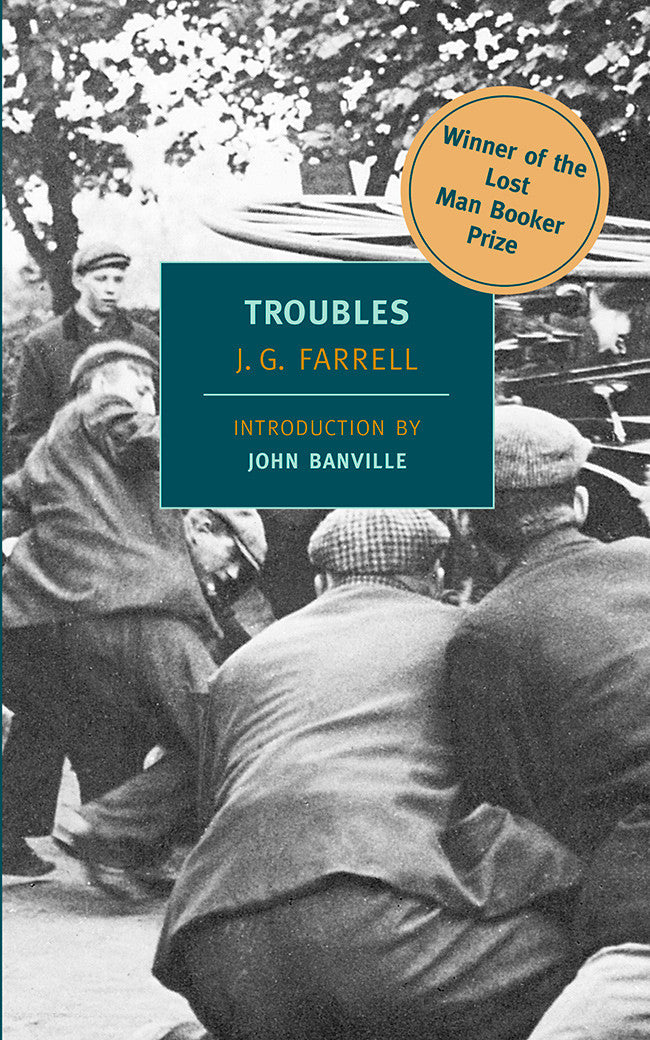
That’s exactly what I experienced when reading Troubles by J.G. Farrell. Published by New York Review of Books, the tale opens with Major Brendan Archer arriving in Kilnalough, Ireland at a hotel called The Majestic. His goal is to meet his supposed fiancé and recuperate for a few months in relative comfort after experiencing the ravages of World War I. What happens instead is that he spends the better part of two years getting increasingly bogged down in the drama of a building, family, town, and country as they all deteriorate in equal measure. The man simply wanted to rest a bit while meeting his potential new wife’s family, but instead, he begrudgingly gets embroiled in a laborious labyrinth of low-scale shenanigans while the specter of larger-scale problems grows in the background.
Yes, the book’s title is definitely a reference to “The Troubles” that consumed Ireland for most of the 20th century, but it’s also a reference to the everyday struggles that people go through just trying to endure life. Farrell’s narrative skills shine in his ability to make these problems often downright hilarious, not by making a mockery of the characters but by making them so relatable. Sure, most of us have never sat idly drinking tea in a salon while an old hotel crumbles around us, but I would gather that many of us have been numbed into oblivion by the inertia of our surroundings, unable to respond with anything more than, “Well, I guess those are the breaks.”
Without giving away any true spoilers, the biggest in-joke of the book is how The Major could have left at any time. He makes that comment to himself and other characters several times, including specific mentions about London, Paris, the Italian coast, and more. But he stayed, almost as if he subconsciously enjoyed the problems or thought he could solve them. No matter the disaster (both tiny and tremendous), he couldn’t pull himself away, as if the hotel and town were a slow-motion reality show that he couldn’t stop watching, to the point that he couldn’t resist injecting himself directly into the troubles – both big and small.


Leave a comment